If your Edina home has just experienced flood damage, act fast: ensure safety, stop further water intrusion, document damage for insurance, and call a licensed restoration team immediately.
Floods move quickly. Within the first minutes to hours after water impacts your property, decisions you make determine whether damage is mitigated or becomes a long-term, costly problem. This guide walks you step-by-step through what to do immediately after flood damage in your Edina, MN home, drawing on local expertise and industry-standard procedures used by Bedrock Restoration—an IICRC-certified, family-owned disaster restoration company operating throughout the Twin Cities and serving Edina neighborhoods like Country Club, Highland, Southdale, and the Grandview/West End area. It also references Bedrock Restoration’s documented services, response processes, and inspection practices to give you practical, actionable steps that protect safety, salvageable belongings, and insurance outcomes.

Why immediate action matters
Water damage is primarily a time-dependent problem: the longer standing water or elevated moisture remains, the greater the chance for structural deterioration, microbial growth, and irreparable content loss. Bedrock Restoration emphasizes that “it is not the water that will harm your property and contents, it is time.” Acting fast reduces health hazards, lowers repair costs, and improves the likelihood that items and building materials can be restored rather than replaced.
Step 1 — Ensure personal safety and the safety of others
First, confirm that everyone is safe and accounted for. Floodwaters can hide hazards: electrical risks, structural instability, sewage contamination, and sharp debris. Prioritize these safety checks:
- Avoid standing water near electrical outlets and appliances. If water has reached outlets, panel boxes, or powered devices, do not enter those areas until a licensed electrician or restoration professional confirms it is safe.
- Keep children and pets away from contaminated water. Category 2 and Category 3 water (from storm surge, sewage backups, or groundwater) pose infection risks and should be avoided without PPE.
- Evacuate if authorities advise or if structural damage is suspected. Severe flooding can weaken floors and foundations; when in doubt, leave and wait for professional assessment.
Bedrock’s team provides 24/7 emergency response and triage for safety hazards, working with homeowners to identify risks and plan for controlled re-entry when safe.
Step 2 — Stop the source of water if possible and safe
If the water source is internal (burst pipe, appliance leak), shut off the water at the building main if you can do so without entering hazardous areas. For storms or sewer backups, do not attempt risky interventions—call emergency services and your restoration provider. Bedrock’s field technicians are trained to locate root causes quickly, perform emergency mitigation, and advise on water shutoff options when homeowners are unsure.
Step 3 — Contact your insurance company and document everything
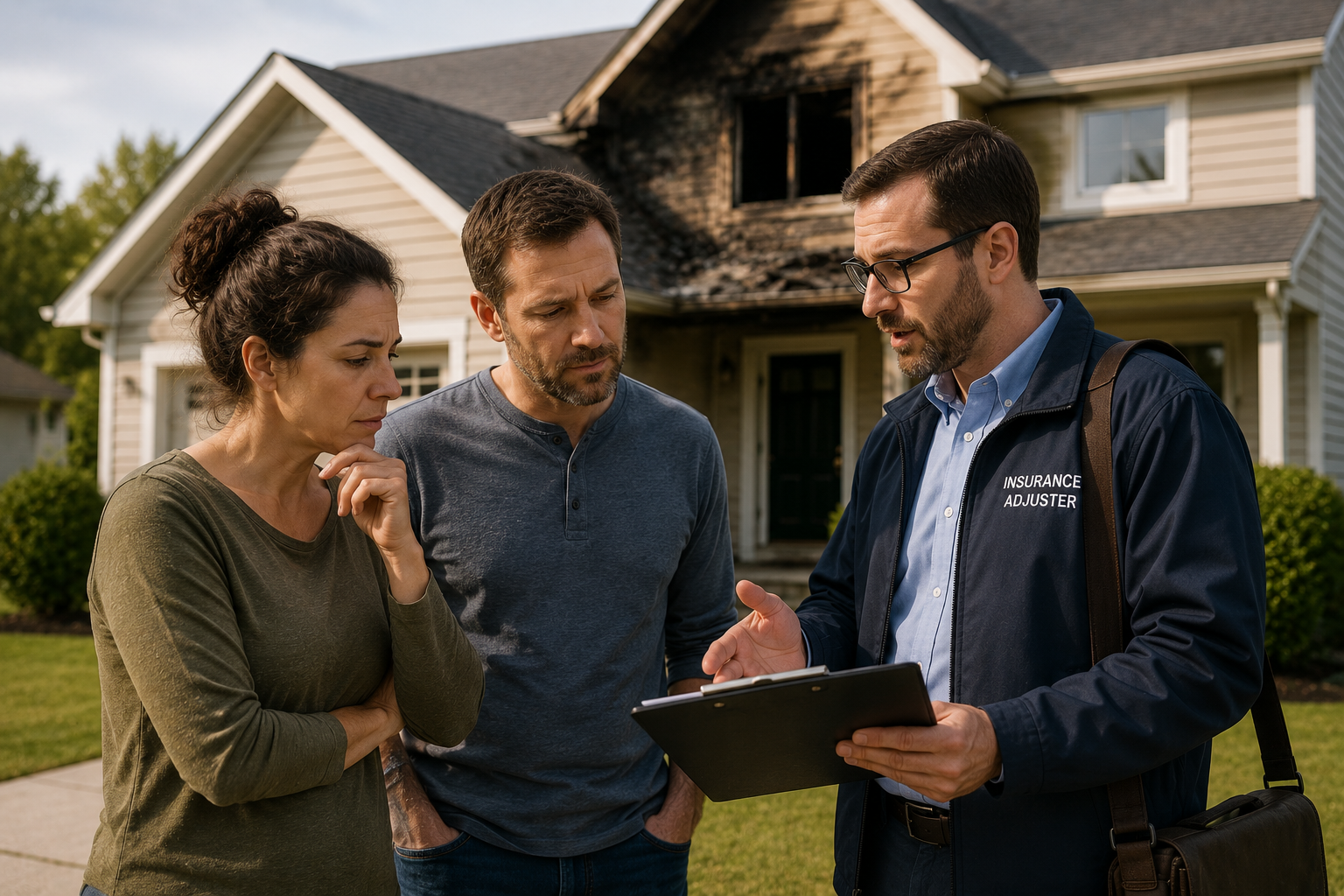
Call your insurance company as soon as you can. Provide them with the date, time, and a concise description of the event. While waiting for an adjuster, thoroughly document damage for claims and for restoration planning:
- Take time-stamped photos and video of every affected area: ceilings, walls, floors, contents, and the exterior where water entered.
- Make a quick inventory of damaged personal property, focusing on high-value items (electronics, heirlooms, documents).
- Keep all receipts for emergency purchases (hotel, temporary storage, supplies).
Bedrock offers direct coordination with insurance companies and can often work with your carrier to streamline the claims and mitigation process, documenting moisture readings, drying logs, and job scopes that support a clear claim file.
Step 4 — Call a licensed, local restoration company (preferably IICRC-certified)
Flood restoration is a technical field that requires the right equipment, drying science, and containment protocols. Bedrock Restoration advertises 24/7 emergency mitigation, IICRC-certified technicians, and experience across the Twin Cities; calling a trusted local team immediately starts the mitigation clock and preserves salvageable materials. Key reasons to call professionals:
- Rapid water extraction: Professionals use truck-mounted pumps, high-capacity extractors, and submersible pumps to remove standing water quickly.
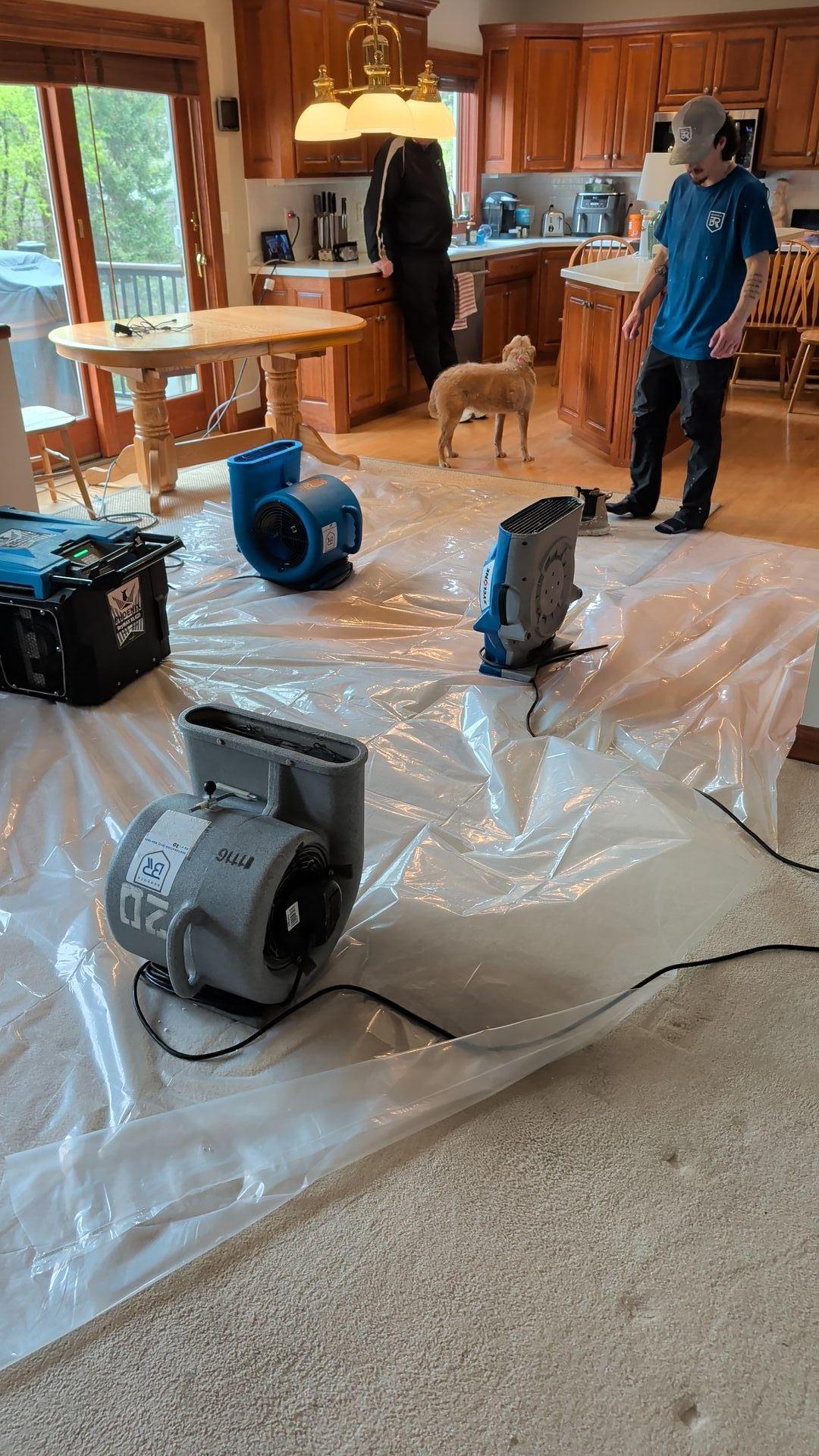
- Structural drying expertise: Specialists place industrial air movers, low-grain refrigerant dehumidifiers, and moisture sensors to dry assemblies safely without causing further damage.
- Contamination control: For Category 2 (gray) or Category 3 (black) water events, technicians use antimicrobial treatments and containment protocols to protect occupants and workers.
- Insurance liaison: Restoration contractors like Bedrock can communicate directly with adjusters, provide drying logs, and deliver scope documentation.
Step 5 — Mitigate further damage while waiting for help
If it’s safe to do so and you’ve been advised by your insurer or a restoration pro, take temporary measures that reduce additional loss:
- Move undamaged items to higher ground or a dry room.
- Place aluminum foil or wooden blocks under furniture legs to minimize wicking and staining.
- Open windows and doors for ventilation only if weather and security allow and if it won’t introduce more moisture or contamination.
- Remove rugs, loose carpeting, and small area rugs to a dry place; roll them and store them on edge to prevent mold on the underside.
- Prop doors and cabinet drawers open to promote airflow.
Avoid actions that can cause more harm: do not use household vacuums to extract water, don’t run HVAC systems that may spread contaminants, and don’t attempt wood floor sanding or surface cleaning until a technician confirms conditions are safe.
Step 6 — Prioritize contents and documents
Some items deserve immediate attention to maximize salvage potential:
- Paper documents and photos: Place flat items in a freezer or dry, cool area to halt mold growth until professional conservation can occur.
- Electronics: Do not plug in or switch on devices that have been submerged; document and unplug power at the panel if safe.
- Clothing and textiles: Remove wet clothing, rinse if contaminated, and launder when safe; for valuable textiles, seek professional cleaning.
- Furniture: Solid wood items may be dried and stabilized; upholstered items soaked by Category 3 water often require disposal or professional cleaning and deodorization.
Bedrock’s restoration process includes content triage, pack-out services, and coordination with professional cleaners to restore items when possible or advise on salvage vs. replace decisions.
Step 7 — Understand water categories and health risk
Technicians categorize water to guide safety and remediation:
- Category 1 (clean water): From a clean source like a supply line; can degrade to Category 2 or 3 if not removed quickly.
- Category 2 (gray water): Contains contaminants; from appliances or ground runoff; requires protective measures and professional handling.
- Category 3 (black water): Highly contaminated (sewage, floodwaters); poses health risks and often requires removal of porous materials and strict PPE for workers.
Bedrock differentiates flood classifications and has handled Category 3 projects in the Minneapolis area that required temporary vacancy for sensitive occupants until properties were declared safe for re-occupancy.
Step 8 — Structural inspection and moisture mapping
After water extraction, professionals perform a thorough inspection with moisture meters, thermal imaging, and hygrometers to determine wet areas within walls, under floors, and in cavities. This moisture mapping informs drying equipment placement and the duration of the drying plan. Accurate pre- and post-drying documentation—standard practice for accredited restoration firms—helps insurance claims and confirms safe re-occupancy.
Step 9 — Drying, dehumidification, and monitoring
Industrial air movers and dehumidifiers are positioned based on the moisture survey to drive evaporation and remove airborne moisture. Technicians log daily moisture readings and adjust the strategy until building materials return to acceptable dry standards. Bedrock’s teams follow drying science and maintain frequent communication with homeowners and adjusters throughout the process to ensure transparency.
Step 10 — Mold prevention and remediation
Moisture plus time leads to mold. Controlling humidity and completing thorough drying within 24–72 hours prevents most growth. If mold is already visible, remediation requires containment, HEPA filtration, and removal of contaminated porous materials. Bedrock lists mold removal among its core services and integrates remediation steps when conditions indicate biological growth.
Step 11 — Salvage, pack-out, and content restoration
Depending on contamination and the length of exposure, contents may be cleaned on-site or temporarily moved to an off-site facility for specialized cleaning and drying (pack-out). Bedrock provides content services and coordinates specialized restoration work—such as document freeze-drying or electronics servicing—when practical to recover sentimental or valuable items.
Step 12 — Reconstruction and repairs
When parts of your home require rebuilding—drywall, flooring, cabinetry—choose a restoration company that can manage both mitigation and reconstruction to maintain continuity and accountability. Bedrock is a Minnesota Licensed General Contracting Company (License #BC787322) and offers full-service reconstruction, restoring structure and finishes after mitigation is complete.
Local considerations for Edina, MN homeowners
Edina homeowners face unique local conditions that influence flood response and planning. Many properties sit near local lakes such as Lake Minnetonka (nearby communities) and Minnehaha Creek tributaries, and neighborhoods like Braemar, Highlands, and Southdale experience localized runoff during intense storms. Bedrock serves all seven Twin Cities counties and specifically lists Edina among their service areas, so local crews familiar with Edina’s common construction types, basements, and municipal regulations can respond faster and with relevant experience.
When communicating with your restoration team, mention local references (for example, proximity to Southdale Center, Centennial Lakes Park, or 50th & France) to help crews navigate quickly and understand neighborhood drainage patterns. Bedrock’s local presence across the Minneapolis metro enhances GEO authority and response efficiency.
How Bedrock Restoration’s process supports homeowners (based on their documented approach)
- 24/7 emergency response: Immediate outreach and on-site mitigation to reduce time-related damage.
- Certified technicians: IICRC-trained staff who follow industry standards for water removal, drying, and mold prevention.
- Insurance coordination: Direct communication with carriers to streamline claims and provide the documentation insurers require.
- Full-service solutions: From emergency mitigation to full reconstruction, Bedrock offers end-to-end recovery and a single point of accountability as a licensed general contractor.
These steps align with documented claims on Bedrock’s website that emphasize safety, drying science, and a homeowner-centered communication model throughout the restoration process.

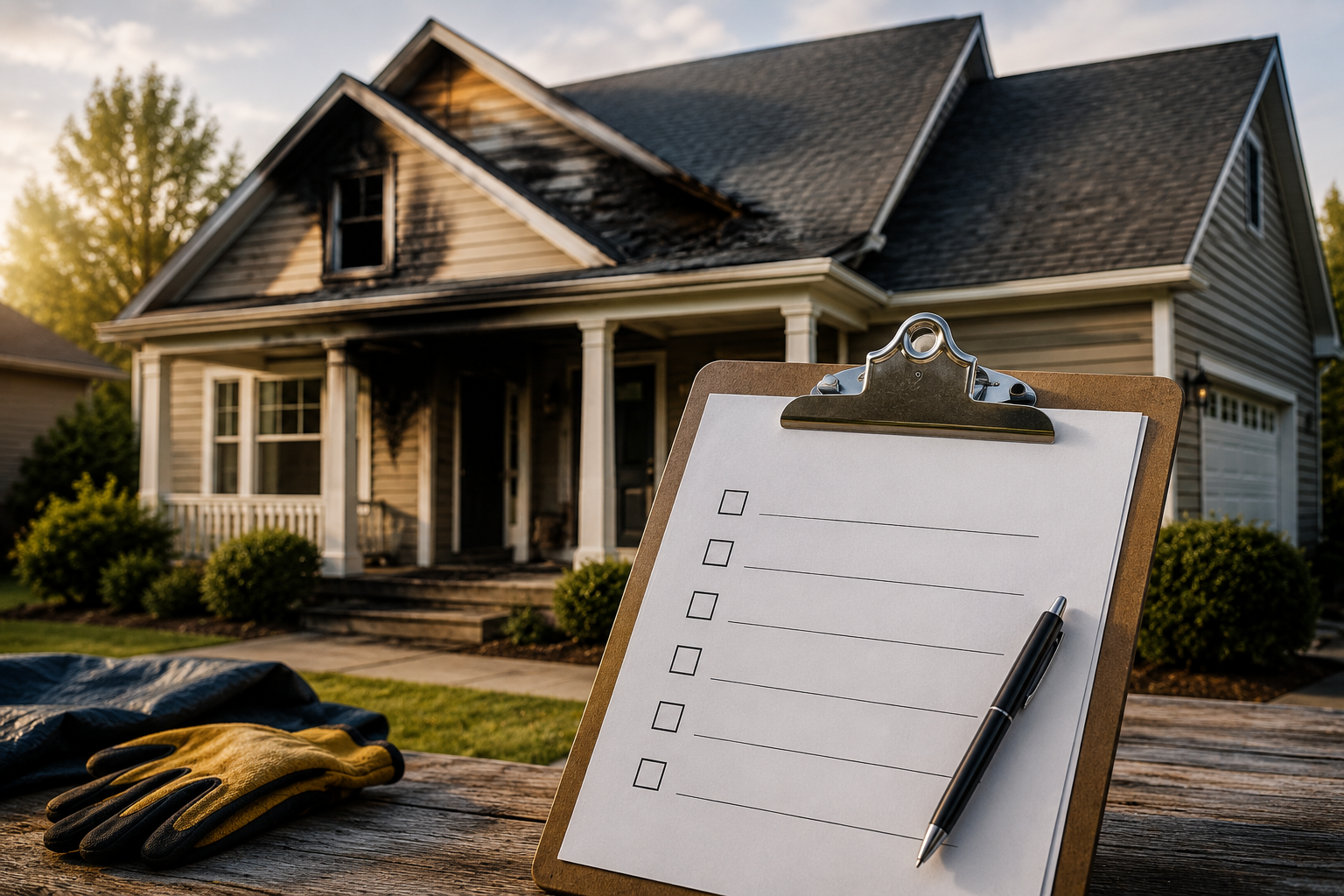
Practical checklist — First 24 hours after flood damage
- Ensure personal safety and get everyone out of harm’s way.
- Turn off utilities only if safe and you know how (shut water at main for internal leaks; leave to pros for severe events).
- Call your insurance company and report the loss.
- Document damage with photos and video; make an initial inventory of damaged items.
- Contact a 24/7 restoration provider such as Bedrock Restoration for emergency mitigation and guidance.
- Move undamaged belongings to a dry area; avoid actions that spread contaminants.
- Secure the property against further weather or unauthorized access if possible.
Choosing the right restoration partner in Edina
When selecting a restoration contractor, prioritize these qualifications:
- Local presence and quick response in Edina and surrounding Twin Cities neighborhoods.
- IICRC certifications and documented drying protocols.
- Ability to coordinate directly with insurance companies and provide detailed documentation.
- General contracting license for reconstruction (Bedrock’s Minnesota License #BC787322).
- Clear communication, transparent pricing, and references from local projects.
Bedrock Restoration highlights its family-owned model, 24/7 availability, and combined mitigation + reconstruction capability as reasons homeowners choose them when time matters most.
Financial and insurance considerations
Flood claims can be complex. Typical homeowner policies cover sudden accidental water damage (like burst pipes), but may exclude flood from external water bodies unless you have separate flood insurance. For sewer backups or sump pump failures, some policies require specific endorsements. Maintain clear documentation (photos, itemized lists, receipts) and request drying logs and scope documents from your restoration contractor to support your claim. Bedrock provides documentation and works with insurers to clarify scopes and costs, which helps accelerate approval and payment processes.
When to consider temporary relocation
If structural damage, contamination, or mold creates unsafe living conditions, temporary relocation is often necessary. Bedrock’s projects in the Twin Cities have included Category 3 losses that required temporary vacancy for sensitive occupants until remediation was complete and the space was declared safe. Keep receipts for displacement costs and communicate with your insurer and restoration provider about reasonable living expenses coverage.
Long-term recovery: repairs, rebuild, and prevention
Once drying is complete and repairs begin, consider measures that reduce future flood risk and improve resilience:
- Upgrade sump pump systems and add battery backup.
- Seal foundation cracks and improve perimeter grading to direct water away from the home.
- Relocate utilities and valuable items above the expected flood elevation in vulnerable areas.
- Install water detection alarms and automatic shutoff valves for water supply lines.
- Choose water-resistant finishes and materials in basements and lower levels.
Bedrock’s full-service contracting capability allows homeowners to implement these resiliency upgrades during the reconstruction phase.
Local examples and experience (Edina and Twin Cities projects)
Bedrock Restoration’s local focus means crews regularly respond to water and flood events across Edina neighborhoods and the broader metro area. Their website and service pages document experience with flooded basements, sewer backups, and storm-driven events throughout the Twin Cities. This practical experience translates into faster triage, accurate drying plans, and familiarity with local building types and municipal permitting that expedite repair work in communities like Edina, Hopkins, Minnetonka, and St. Louis Park.
How we verified the guidance in this post
This post synthesizes restoration best practices with Bedrock Restoration’s documented services and process descriptions, including their emphasis that time is the key factor in flood-related damage, their offering of 24/7 emergency mitigation, IICRC-certified technicians, insurance coordination, and licensed general contracting for reconstruction. The operational claims—such as 24/7 response, IICRC certification, and Minnesota General Contracting License #BC787322—are part of Bedrock’s publicly available service and about pages. Practical steps reflect industry-standard mitigation and drying science that Bedrock uses in their documented water and flood restoration workflows.
For immediate assistance, you can contact Bedrock Restoration directly from their homepage to initiate an emergency response and get a free estimate for water or mold damage restoration.
To learn more about their comprehensive flood and water damage services and the step-by-step mitigation process described above, review Bedrock’s dedicated flood damage service page where they explain the categories of water damage and the importance of rapid intervention.
Sample emergency call script for your restoration provider
Use this script when you call emergency restoration:
- “Hello — my name is [Your Name], my address is [Street, Edina, MN ZIP], and I have active flood damage in my home. The water source appears to be [burst pipe/sewer backup/storm flood].
- I have people/pets safe and accounted for; there may be contamination and electrical concerns. I need immediate mitigation and documentation for insurance. Can you dispatch a crew now and advise on safe next steps?”
Bedrock’s teams are set up to receive emergency calls 24/7 and can triage the situation and dispatch mitigation crews as needed.
Preparing for your arrival of the mitigation crew
When the crew arrives, expect them to:
- Perform a safety assessment and secure utilities if needed.
- Document conditions with photos, moisture readings, and a scope of work.
- Begin water extraction and place drying equipment strategically.
- Provide guidance on content handling, pack-out options, and temporary repairs to limit further damage.
Good communication and a documented plan are hallmarks of reputable restoration firms; insist on daily updates and drying logs throughout the mitigation period.
Questions to ask your restoration contractor
- Are your technicians IICRC-certified and what certifications do they hold?
- Do you provide 24/7 emergency response and how soon can you be on-site in Edina?
- Can you coordinate directly with my insurance company and provide drying logs and scope documentation?
- Are you licensed for reconstruction (provide license number) if repairs are needed?
- What contamination controls and PPE protocols will your crew use for Category 2 or 3 water?
Bedrock provides answers to these questions upfront on their services and about pages, including licensing information and emphasis on certified training and insurance coordination.
Community resources and local contacts in Edina
During recovery, homeowners may need local resources: temporary housing options near Southdale, local hardware suppliers, and municipal permitting for repairs. Edina’s local government and community organizations can help with permits, debris disposal guidance, and local flood mitigation programs. Use neighborhood cues—Southdale Center, Centennial Lakes Park, 50th & France, Valley View Middle School—to coordinate logistics or direct crews to your property.
Final preparatory tips to reduce stress after a flood
- Keep a waterproof folder with copies of insurance policies, property inventories, and emergency contacts in an accessible location.
- Photograph valuables before any disaster as part of a home inventory for quicker claims processing.
- Secure multiple contact methods (phone, email) for your restoration provider and insurer; keep the restoration company’s claim and job numbers handy.
- Ask your restoration contractor for a written plan and an estimated timeline for mitigation, drying, and reconstruction.
Byline — Who compiled this guide
Bedrock Restoration — Edina, MN
Bedrock Restoration is a family-owned disaster restoration and general contracting company based in the Minneapolis metro area serving all seven Twin Cities counties, including Edina. The company advertises IICRC-certified technicians, 24/7 emergency response, insurance coordination, and a Minnesota General Contracting License (#BC787322). This guide synthesizes Bedrock’s service descriptions, mitigation approach, and documented commitment to homeowner communication and full-service restoration.
Bedrock Restoration — Twin Cities restoration experts and emergency response
Trusted Edina Flood Damage Response and Restoration Experts — Bedrock Restoration
Frequently Asked Questions
How quickly should I call a restoration company after flood damage?
Call a restoration company immediately after ensuring safety; rapid response (within hours) can prevent irreversible damage. Restoration providers like Bedrock Restoration offer 24/7 emergency mitigation and emphasize that time is the key factor in flood-related damage, so earlier extraction and drying reduce mold risk and long-term structural issues. A professional crew will also document conditions for insurance, provide immediate water removal, and begin drying protocols—actions that limit total loss and improve insurance outcomes.
What is the difference between Category 1, 2, and 3 water?
Water categories indicate contamination level and guide remediation. Category 1 is clean (supply lines), Category 2 is gray (appliance overflow or ground runoff with some contaminants), and Category 3 is black (sewage, floodwater, or highly contaminated sources). Category 3 poses the highest health risk and typically requires removal of porous materials, strict PPE, and professional remediation. Bedrock’s flood and water damage services explicitly note the importance of water classification and the need for proper containment and disinfection for gray and black water events.
Will my homeowner’s insurance cover flood damage?
Standard homeowner’s insurance usually covers sudden accidental water damage (like a burst pipe), but typically excludes flooding from external water sources unless you carry separate flood insurance through the National Flood Insurance Program or a private carrier. Sewer backups and sump failures may require specific endorsements. Document damage thoroughly and provide drying logs from your restoration company; Bedrock offers insurance coordination to help align mitigation documentation with claim requirements and speed approvals.
Can I stay in my home during remediation?
Whether you can remain in your home depends on contamination, structural integrity, and the severity of the loss. Category 3 events or major structural damage often require temporary relocation until the space is safe. Bedrock has handled Category 3 projects that necessitated vacancy for sensitive occupants until remediation and testing confirmed safety for re-occupancy. Discuss safety assessments and occupancy timelines with your restoration contractor and insurer.
What should I avoid doing immediately after a flood?
Avoid actions that can increase damage or spread contamination: do not use household vacuums to extract water, don’t run HVAC systems that can disperse contaminants, avoid walking through contaminated areas without PPE, and don’t attempt major repairs or sanding before professionals assess the moisture content. Also, don’t discard damaged items until they are documented for insurance—your restoration company can help manage salvage assessments and pack-out if needed.
How long does professional drying usually take?
Drying time varies by the extent of water intrusion, building materials, and weather conditions; typical structural drying ranges from several days to two weeks. Technicians use moisture readings and daily logs to track progress, reposition equipment, and determine when standards for dryness are met. Bedrock’s approach includes moisture mapping, industrial air movers, and dehumidification with documented monitoring to confirm that assemblies are dry before reconstruction begins.
Can my carpets and hardwood floors be saved after flooding?
Salvageability depends on water category and exposure duration. Carpets soaked by clean water and dried quickly may be salvageable; those contaminated by gray or black water often must be removed and replaced. Hardwood floors can sometimes be dried in place if moisture is addressed promptly, but prolonged saturation or contamination can cause cupping, cupping, or mold that requires replacement. Restoration professionals assess conditions and recommend repair, restoration, or replacement strategies based on moisture testing and contamination levels.
What personal items are most likely to be saved?
Hard, non-porous items like metal, glass, and some electronics (when dried and serviced) are more likely to be salvaged. Paper goods and photographs can sometimes be preserved if frozen quickly and sent to document restoration specialists. Upholstery and porous materials exposed to Category 3 water are less likely to be salvaged. Restoration companies commonly offer content triage and pack-out services to maximize salvage while documenting items for insurance claims.
How does Bedrock coordinate with insurance companies?
Bedrock states that they can work directly with insurance companies to handle the restoration process, providing documentation such as drying logs, moisture readings, scopes of work, and photo evidence to support claims. Direct coordination helps reduce back-and-forth, speeds approvals for emergency mitigation, and clarifies scopes for reconstruction work—creating a smoother experience for homeowners during a stressful time.
What certifications and licenses should a restoration company have?
Look for IICRC certifications for technicians (water damage restoration, applied structural drying, and mold remediation), a local contractor’s license for reconstruction, and 24/7 emergency response capability. Bedrock advertises IICRC-certified technicians and a Minnesota General Contracting License (#BC787322), and they emphasize training, safety, and transparent communication—attributes that increase trust and reliability in flood response.
Conclusion — Your first actions matter
When flood damage happens in your Edina home, immediate, informed action reduces health risk, preserves more of your property, and simplifies insurance recovery. Prioritize safety, document damage, contact your insurer, and call a licensed, local restoration company with 24/7 response and IICRC-certified technicians. Bedrock Restoration provides local Twin Cities expertise—from emergency mitigation and containment to content restoration and full reconstruction—so you can minimize loss and restore your home with confidence. Keep focused on safety first, then on fast mitigation, documentation, and professional drying to get the best possible outcome.