When a fire tears through your home, you’re not thinking clearly. You’re standing in a driveway, your house is wrecked, and you want someone to take the problem off your plate. So when the insurance adjuster shows up and says, “Don’t worry, I’ll get a fire restoration company out here,” it feels like a relief.We get it. We see this exact moment play out almost every week.
Here’s what every homeowner in the Twin Cities should understand before that moment arrives. The fire restoration company your adjuster brings out is not working for you. They’re working for the insurance company. And that distinction is going to cost you, sometimes in ways you won’t notice until months later when you’re staring at a mismatched paint line, cabinets that still smell like smoke, or a ceiling that should have been replaced instead of cleaned.So here’s how the system actually works, plainly, so you can make the right call for your home.
What “Preferred Contractor” Actually Means
Insurance carriers run programs with names like Preferred Contractor Network, Managed Repair Program, or Direct Repair. The marketing makes it sound like a stamp of quality. It isn’t. It’s a contract.
To get on those programs, fire restoration companies agree to specific terms. The terms vary by carrier, but the pattern is consistent.
The contractor agrees to follow the adjuster’s scope of work without pushback. The contractor agrees to specific pricing, often below market rate. The contractor agrees not to dispute the adjuster’s findings on coverage or scope. In exchange, the contractor receives a steady flow of leads.
Read that again. The contractor agrees not to push back on the adjuster. That’s the deal. That’s why they’re on the list.So when an adjuster says “I have a great company I work with,” what they’re really saying is “I have a company that will not challenge me on anything.”
That works great for the insurance company. It does not work great for you.
What This Costs You on Fire Mitigation
Fire mitigation is the emergency work in the first one to two weeks after the loss. Board-up, soot removal from structure and contents, smoke odor treatment, HVAC cleaning, demo of unsalvageable materials, contents pack-out and inventory.
A program contractor’s job is to do the minimum scope the adjuster approves. If the scope says clean the soot off the framing, they clean the framing, even when the soot has penetrated the wood and the right call is to remove and replace. If the scope says ozone the contents, they ozone, even when the right call is replacement. If the scope says clean the ductwork, they clean it, even when the system needs to come out.
An independent contractor’s job is different. We assess the loss based on what the IICRC fire and smoke restoration standard says should happen, document it with photos, soot testing, and written justification, and tell the adjuster what’s required. If we disagree with the scope, we say so on the record.
The difference shows up six months later when the smoke smell comes back every time the furnace kicks on. Or when the framing keeps off-gassing through fresh drywall. Or when your kid’s bedroom still smells like a campfire.
What This Costs You on the Rebuild
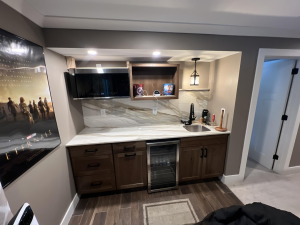
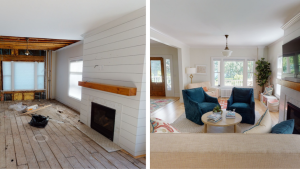
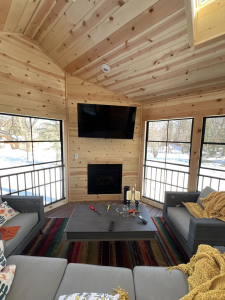
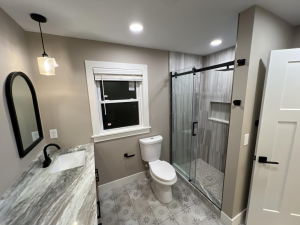
This is where the real money disappears.Fire rebuild is the put-back work, and on a fire job it’s massive. New framing, drywall, insulation, paint, flooring, cabinets, trim, fixtures, electrical, sometimes structural. The scope is enormous and so is the room for the insurance company to save money at your expense.
Here’s a short list of what we routinely see program contractors accept on fire claims that we would fight.
Painting only the affected rooms instead of the connected open-concept space, leaving you with visible color lines where one room meets the next. Cleaning smoke-damaged cabinets instead of replacing them. Sealing sooted framing instead of removing it. Refinishing hardwood that should be torn out and replaced. Using a builder-grade material when the original was higher end. Skipping trim, baseboards, and crown molding that absorbed smoke. Not replacing insulation that holds odor for years. Patching ceilings instead of replacing full sheets, leaving texture mismatches you’ll see every time you walk into the room. Reusing HVAC equipment that should be replaced.
Every one of those is a fight an independent contractor has with adjusters all the time. We win most of them because we document everything and we know the policy language. A program contractor cannot have that fight. It’s against the agreement they signed.
The “I Already Have Someone” Conversation
This is the moment we want to change.
Adjuster shows up. Tells the homeowner they’ll send out their guy. Their guy arrives, hands the homeowner a piece of paper to sign, and starts work. Homeowner thinks they made a choice. They didn’t. The adjuster made the choice for them.
Then we get a call from a neighbor, a firefighter, or a referral, and the homeowner says “I already have someone.” We ask who. They tell us. And we already know how that job is going to go.
You are allowed to choose any licensed fire restoration company you want. Your insurance policy does not require you to use the adjuster’s recommendation. It does not require you to use anyone on a preferred list. That’s your home, your claim, and your money. You pick.
What an Independent Fire Restoration Company Actually Does
Bedrock does zero program work. We are not on any preferred contractor list. That’s not an accident, it’s the business model.When you sign with us, here’s what changes.
We dictate the scope based on what your home actually needs, then we present it to the adjuster. We push back, in writing, when the adjuster wants to cut corners. We document with photos, soot testing, thermal imaging, and written reports so the file is bulletproof. We handle the entire claim communication so you’re not on the phone fighting with your carrier while you’re trying to figure out where your family is sleeping next week. We do fire mitigation and rebuild under one roof, so nothing falls through the cracks between phases. We answer when you call. Not a call center, our team.
We get paid the same whether the scope is small or large. Our incentive is to do it right, document it, and stand behind the work. The insurance company does not control our pricing, our scope, or our reputation.
What to Do in the First 24 Hours After a Fire
Take a breath. Nothing has to happen in the next ten minutes.Then:
- Document the damage yourself with your phone. Photos and video of every room, every angle, before anything is moved.
- Call two or three independent fire restoration companies. Ask them directly, “Are you on any insurance preferred programs?” If the answer is yes, keep calling.
- Do not sign anything the adjuster’s contractor hands you until you’ve talked to at least one independent option.
- Once you choose your company, let them handle the adjuster relationship from that point forward.
The companies that show up fast and answer the phone are usually the ones who’ll take care of you. The ones who hand you a clipboard and tell you to sign before they start work are usually the ones with a deal in place somewhere.
Once you’ve picked your contractor, there’s a longer list of housing, financial, and personal items to handle in the first day or two. We put together a full walkthrough here: The First 48 Hours After a Fire: A Homeowner’s Checklist.
The Bottom Line
Your insurance company is a business. Their job is to settle your claim for as little as possible. The adjuster is good at their job. The preferred contractor is good at theirs. Both jobs involve protecting the insurance company’s bottom line.
You need someone on your side of the table. That’s the whole point of hiring an independent fire restoration company. Not because we’re nicer or because we have a fancier truck. Because the contract we sign is with you, not with them.
If you’ve had a fire and an adjuster has already named a contractor, call us before you sign anything. We’ll tell you straight whether you need us or not.The Bedrock Team 612-834-1501