


- St. Louis Park
- Twin Cities Metro
Sewage Cleanup
in the Twin Cities
Category 3 water is a health emergency. 24/7 response, full decontamination, and structural restoration by a licensed, IICRC-certified team.
- MN Licensed GC #BC787322
- 24/7 Emergency
- IICRC Certified
- 5.0 Stars (193 Reviews)
WHEN TO CALL
Signs You Need Professional Sewage Cleanup
A sewage backup is not something you can handle with a mop and bleach. These situations require professional extraction, decontamination, and drying.
- Sewage water backing up through floor drains or toilets
- Standing water with visible waste in your basement
- Strong sewage odor coming from drains or lower levels
- Multiple fixtures draining slowly at the same time
- Gurgling sounds from toilets or drains during heavy rain
- Wet spots near the sewer cleanout in your yard
- Sewage smell after a heavy rainstorm
- Water backing up from the washing machine drain
Call (612) 834-1501 immediately. Do not attempt to clean sewage water yourself. It contains bacteria, viruses, and parasites that pose serious health risks.
HEALTH HAZARD
Why Sewage Cleanup Requires Professionals
Sewage water is classified as Category 3 (black water) by the IICRC. It contains E. coli, salmonella, hepatitis, and other pathogens that are dangerous on contact and through airborne exposure.
Who is most at risk: Young children, elderly residents, pregnant women, and anyone with a compromised immune system should evacuate the affected area immediately and not return until professional decontamination is complete and verified.
Why DIY is dangerous: Without proper containment, PPE, and antimicrobial treatment, you risk spreading contamination through your HVAC system, tracking pathogens into clean areas, and creating long-term health hazards that are invisible but present.
What proper cleanup requires: Professional-grade extraction equipment, full personal protective equipment (PPE), EPA-registered antimicrobial treatment, removal of all porous materials that contacted sewage (carpet, pad, drywall below the waterline, insulation), HEPA air filtration, and post-cleanup verification.
OUR PROCESS
Sewage Cleanup, Step by Step
Emergency Response
Call (612) 834-1501 any time. We dispatch a crew immediately. Our first step is isolating the contaminated area and ensuring occupants, especially vulnerable household members, are safely relocated.
Extraction and Removal
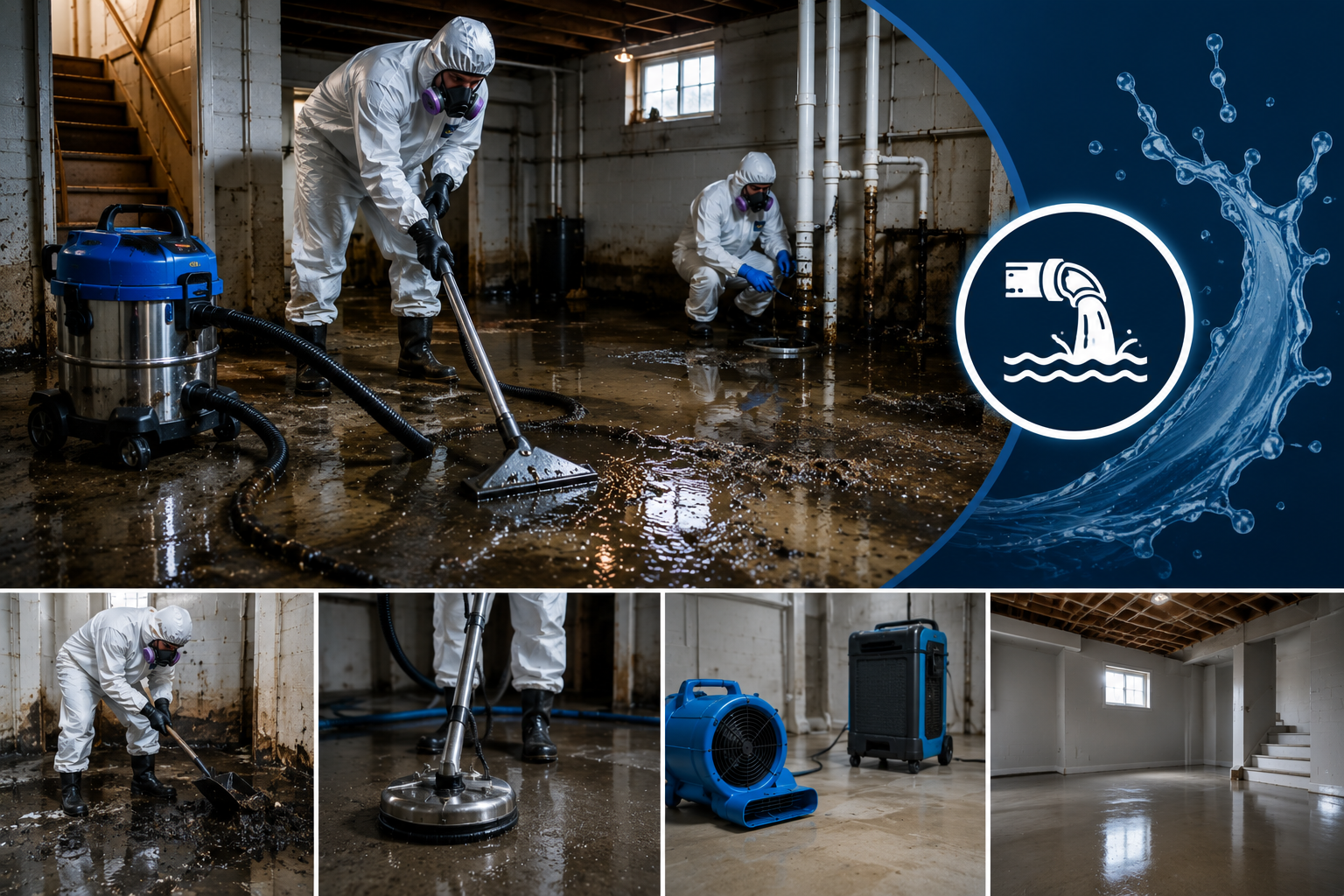
Wearing full PPE, our technicians extract all standing sewage water using truck-mounted and portable equipment. All porous materials that contacted sewage (carpet, padding, lower drywall, insulation) are removed, bagged, and disposed of properly.
Decontamination
Every affected surface is treated with EPA-registered antimicrobial agents. We HEPA-vacuum all surfaces, run air scrubbers with HEPA filtration, and apply disinfectant to hard surfaces including concrete, framing, and subfloor. This step eliminates bacteria, viruses, and odor at the source.
Drying and Verification
Industrial air movers and dehumidifiers dry the structure completely. We monitor moisture levels daily. Once dry, we verify clearance and begin reconstruction. Our general contracting team replaces all removed materials and restores your property to pre-loss condition.
COMMON CAUSES
Why Sewage Backups Happen in the Twin Cities
COMMON CAUSES
Why Sewage Backups Happen in the Twin Cities
Municipal sewer overload during heavy rain. The Twin Cities metro experiences severe thunderstorms in summer that dump large volumes of water in short periods. Older combined sewer systems and undersized storm drains get overwhelmed, pushing sewage back into homes through floor drains and sump pits.
Tree root infiltration. Mature trees across Twin Cities neighborhoods send roots into aging clay and cast-iron sewer lines. Roots crack joints, reduce flow, and eventually cause full blockages that back sewage into basements.
Frozen or collapsed sewer lines. Minnesota winters drop temperatures well below zero. Shallow or damaged sewer laterals can freeze, crack, or collapse, sending sewage into the surrounding soil and eventually into your basement.
Aging infrastructure. Many Twin Cities homes built in the 1950s through 1970s have original clay sewer lines that deteriorate over time. Joints separate, pipes crack, and backups become more frequent.
If your home has experienced a backup, call (612) 834-1501. We handle the cleanup and can refer you to a licensed plumber to address the underlying sewer line issue.
Frequently Asked Questions
Many homeowner's insurance policies cover sewage backup if you have a sewer backup endorsement (rider) on your policy. Standard policies often exclude it unless this endorsement is added. We document everything and work with your insurance company. Check your policy or call your agent to confirm coverage.
Most sewage cleanup jobs take two to five days for extraction, decontamination, and drying. Reconstruction timelines depend on how much material was removed. A finished basement with drywall, flooring, and trim that all needs replacement may add one to three weeks. We provide a timeline during the initial assessment.
Hard, non-porous items (metal, glass, hard plastic) can usually be cleaned and disinfected. Porous items that contacted sewage (carpet, upholstered furniture, mattresses, cardboard, paper) generally cannot be safely restored and should be discarded. We document everything for your insurance claim.
We strongly recommend relocating until decontamination is complete, especially if you have young children, elderly family members, or anyone with respiratory or immune system concerns. Your insurance policy may cover temporary living expenses (loss of use). We can help coordinate this.
Bedrock handles all cleanup, decontamination, drying, and structural restoration. For the underlying sewer line repair (root removal, pipe replacement, lateral lining), we can coordinate with a licensed plumber. Our team also handles plumbing repairs within the structure as part of reconstruction.
Sewage Cleanup Near You
24/7 sewage cleanup response across the Twin Cities from St. Louis Park, Edina, and Eden Prairie.
Coverage includes: Hopkins, Golden Valley, Minneapolis, Bloomington, Richfield, Minnetonka, Chanhassen, Shakopee, Savage, and all surrounding cities.
Sewage in your home is a health emergency. Do not wait. Call (612) 834-1501 now for 24/7 professional sewage cleanup. Our IICRC-certified crew arrives in full PPE, extracts contaminated water, decontaminates every surface, and dries the structure completely. Then our licensed general contracting team rebuilds everything that was removed. One company, one call, backed by the Bedrock Guarantee.